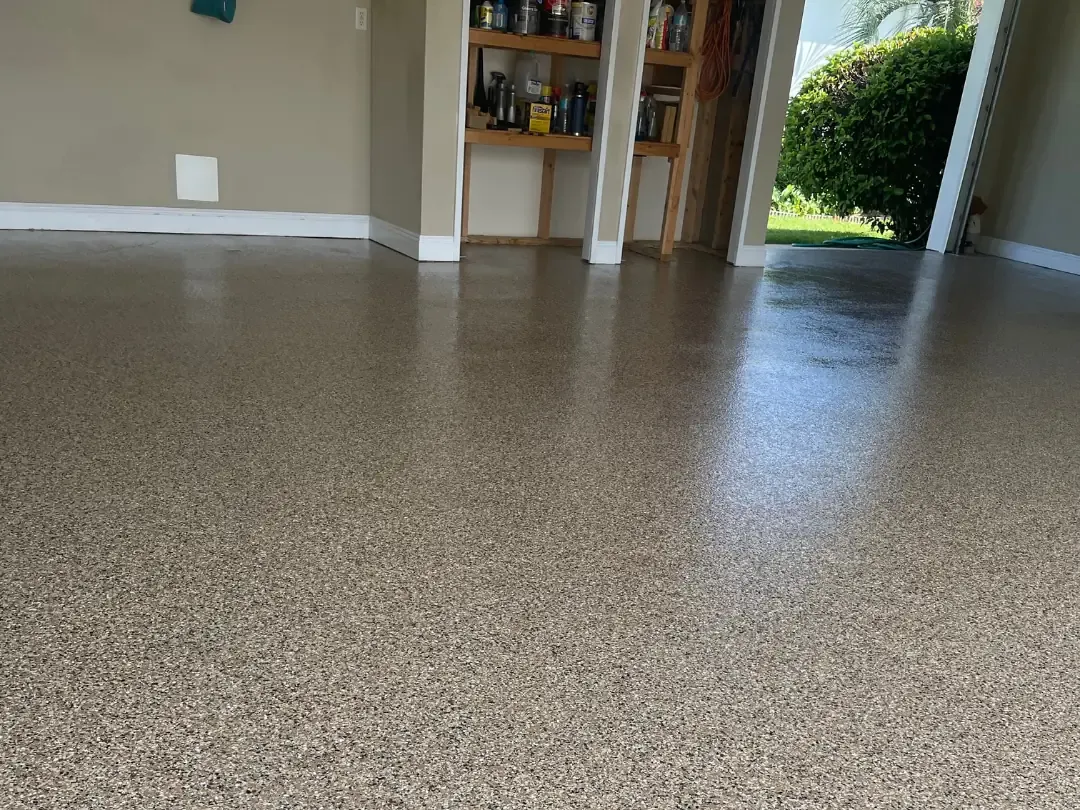
Epoxy flooring Baldwin County homeowners and business owners request most often is built to survive Gulf Coast humidity, heat, and heavy daily use, and it’s become one of the most requested upgrades for garages, workshops, and commercial spaces here, for good reason. Between the heat, the humidity, and the heavy foot or vehicle traffic that most floors deal with here, a standard painted or bare concrete surface just doesn’t hold up the way people expect it to. Epoxy changes that.
If you’re weighing whether epoxy flooring is worth it for your home or business in Baldwin County, this guide walks through what it actually is, how it performs in our climate, what the installation process looks like, and what factors affect the cost.
What Is Epoxy Flooring?
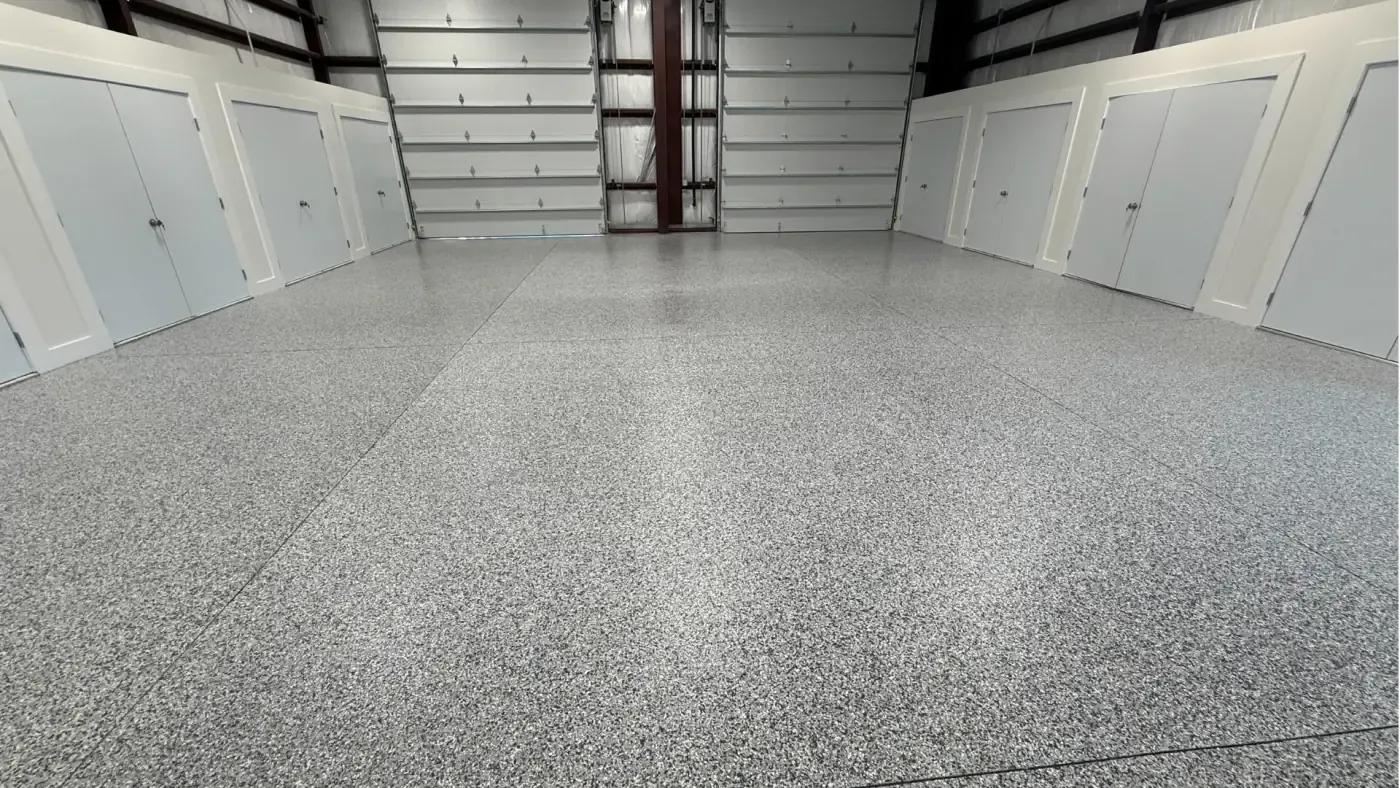
Epoxy flooring is a resin-based coating system applied over concrete. Once cured, it forms a hard, seamless surface that’s far more durable than paint and far easier to clean than bare or sealed concrete. Most systems are made up of a few layers:
- A primer coat that bonds to the prepped concrete
- A base epoxy coat, sometimes with color or decorative flake broadcast into it
- A topcoat that seals everything and adds chemical, UV, and abrasion resistance
The finished result can range from a solid color, clean and simple, to a full flake or metallic system with more texture and visual depth.
Epoxy Flooring Baldwin County: Why It Holds Up on the Gulf Coast
Gulf Coast conditions are tough on flooring. Between the humidity, the heat, and the seasonal storms, surfaces in Fairhope, Foley, Gulf Shores, Orange Beach, Daphne, Robertsdale, and Bay Minette are constantly dealing with moisture exposure most other regions don’t see nearly as often.
Bare concrete absorbs moisture, which leads to staining, mildew, and eventually cracking or spalling. Standard concrete paint doesn’t bond well long-term and tends to peel or chip within a few years, especially in garages that see vehicle traffic or workshops that deal with chemical spills.
Epoxy flooring solves both problems. It creates a moisture-resistant barrier that keeps humidity from soaking into the slab, and it holds up to daily wear far longer than paint. That’s part of why epoxy flooring has become such a common request across Baldwin County homes and businesses, especially garages, workshops, and outdoor-adjacent spaces that deal with the elements year-round.
Residential vs Commercial Epoxy Flooring Applications
Epoxy flooring gets used differently depending on the space, and the system we recommend usually shifts based on what the floor needs to handle.
Residential applications typically include:
- Garage floors
- Workshops and hobby spaces
- Basements and utility rooms
- Patios and covered outdoor areas
Homeowners usually want something that looks clean, resists oil and chemical stains, and holds up to daily vehicle traffic without needing to be redone every few years.
Commercial and industrial applications typically include:
- Warehouses and distribution space
- Retail and showroom floors
- Manufacturing facilities
- Restaurant kitchens and back-of-house areas
Commercial spaces usually need a thicker system built for heavier traffic, forklift loads, or exposure to chemicals and grease. In these cases we’re often specifying a different epoxy formulation entirely, sometimes paired with a urethane topcoat for added durability.
The Epoxy Flooring Installation Process
A lot of the final result comes down to what happens before any epoxy actually gets poured. Here’s what the process generally looks like:
- Surface prep. The concrete gets ground down mechanically to remove old coatings, contaminants, and to open up the surface pores so the epoxy can properly bond. Industry groups like the International Concrete Repair Institute publish surface profile standards contractors use to make sure a slab is prepped correctly before coating. This step gets skipped or rushed more often than it should, and it’s usually the reason floors fail early.
- Cleaning. Dust and debris from grinding get fully cleared before anything goes down.
- Crack and joint repair. Any cracks or damaged areas get patched and leveled first.
- Primer coat. A bonding primer goes down to give the epoxy something solid to grip.
- Base coat application. The epoxy is mixed to an exact ratio and applied evenly. If the mix ratio is off, the whole floor can fail down the line.
- Flake or color broadcast. If the system includes decorative flake, it gets broadcast into the base coat while it’s still wet.
- Topcoat and cure. A protective topcoat seals the floor and gives it UV and chemical resistance, then the floor needs time to properly cure before it’s back in use.
Rushing any one of these steps is usually what separates a floor that lasts ten-plus years from one that starts lifting or peeling within a year or two.
Signs Your Current Floor Might Need Epoxy Flooring
A few signs it might be time to consider epoxy flooring instead of patching or repainting:
- Visible cracking, pitting, or spalling in the concrete
- Constant dusting, where the concrete surface breaks down into fine powder
- Peeling or bubbling paint from a previous coating
- Staining from oil, chemicals, or moisture that won’t clean up
- A garage or shop floor that just looks worn no matter how often it’s cleaned
If any of that sounds familiar, the floor is likely past the point where surface-level fixes will hold.
Cost Factors for Epoxy Flooring in Baldwin County
Epoxy flooring costs vary based on a handful of factors:
- Square footage. Larger spaces bring the per-square-foot cost down slightly, but total cost still scales with size.
- Condition of the existing concrete. A slab with heavy damage or previous coatings needs more prep work, which affects labor time.
- System type. A basic solid-color epoxy costs less than a full flake or metallic system.
- Traffic and use case. Commercial floors that need thicker, more durable systems typically cost more than a standard residential garage floor.
The best way to get an accurate number is a walkthrough of the space, since prep needs can vary a lot from one slab to the next even within the same square footage.
Choosing an Epoxy Flooring Contractor in Baldwin County
Not every contractor preps a floor the same way, and prep is where most epoxy flooring failures start. When comparing contractors, it’s worth asking:
- What does your surface prep process actually involve?
- What epoxy system do you recommend for this specific space, and why?
- How long does the floor need to cure before it’s back in use?
- Can I see examples of completed projects in similar spaces?
A contractor who can walk through their process clearly, and explain why they’re recommending a specific system for your space, is usually a good sign they’re not just applying a one-size-fits-all approach.
Frequently Asked Questions
How long does epoxy flooring last? A properly installed epoxy floor can last well over a decade with normal residential use, and longer with proper care. Commercial floors under heavier traffic may need a topcoat refresh sooner depending on use.
How long does installation take? Most residential garage floors can be completed in a few days, including prep, application, and cure time. Larger commercial spaces take longer depending on square footage and system type.
Can epoxy flooring be installed over an existing floor? It depends on the current surface. In most cases, epoxy goes directly over prepped concrete rather than over an existing coating, since proper bonding requires that prep step.
Is epoxy flooring slippery? A properly finished epoxy floor with the right topcoat can include additives for slip resistance, which is worth asking about for commercial spaces or areas that get wet.
Final Thoughts
Epoxy flooring in Baldwin County holds up to the kind of humidity, heat, and daily wear that standard concrete or painted floors just aren’t built for. Whether it’s a residential garage or a commercial space in Fairhope, Foley, Daphne, or anywhere else along the Gulf Coast, the right system and a properly done prep process make the difference between a floor that lasts and one that needs to be redone in a few years.
If you’re considering epoxy flooring for your home or business, we’re happy to walk through the space and talk through what system makes sense for how it’ll actually be used.